
Frozen and Burst Pipes in Lexington: Prevention, Warning Signs, and What to Do First
October 13, 2026
Read more
Smelling gas or hearing a hiss near your line? Here's what every Lexington homeowner needs to know before calling for help.
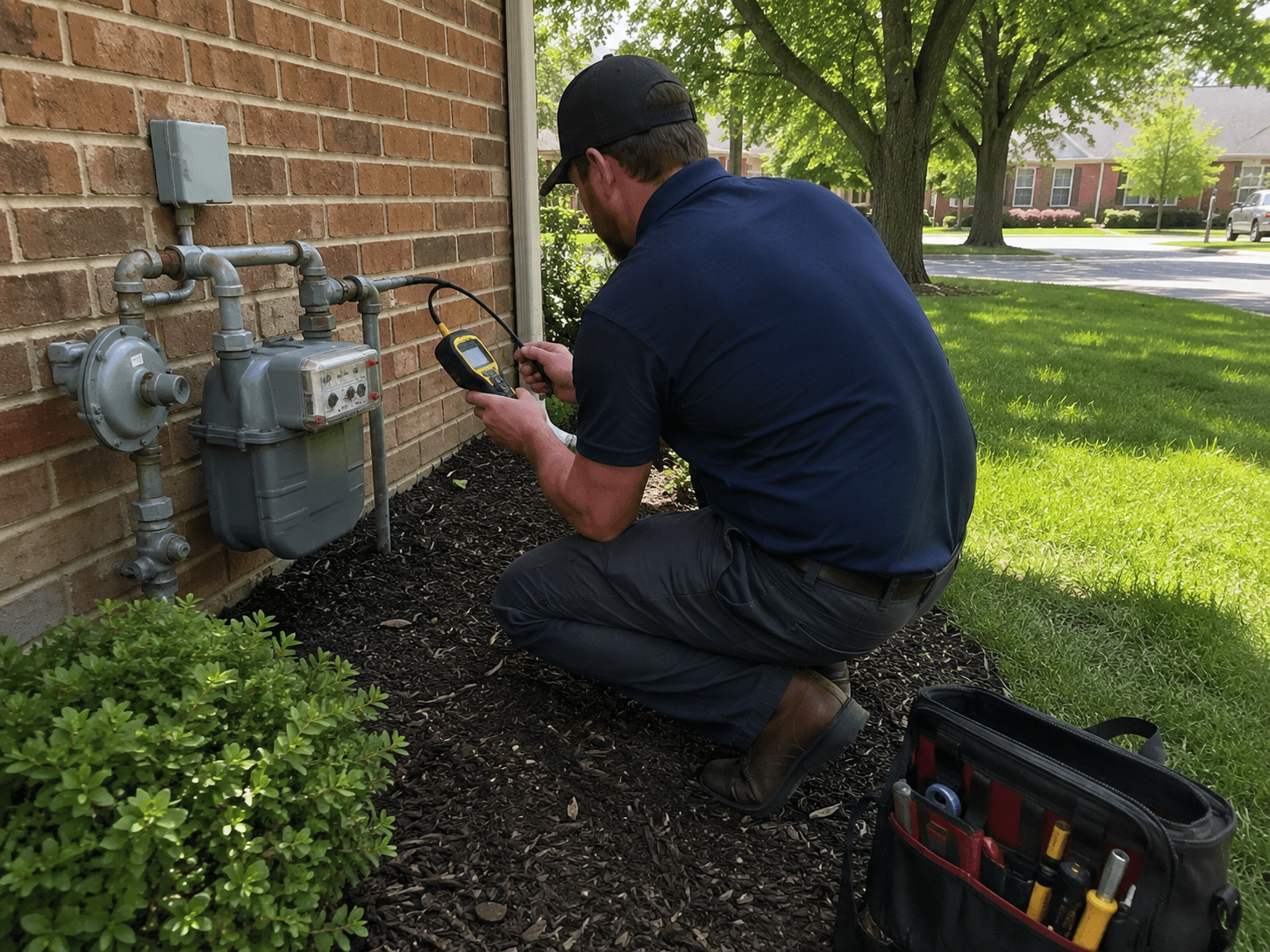
A hissing sound near your gas line is not something to shrug off. Neither is a faint rotten egg smell in the kitchen. Gas leak detection matters more than almost any other home safety topic. The risks range from health issues to real explosion danger. At Wildcat Leak Detection, we handle gas leak calls across Lexington, Georgetown, and Frankfort. Knowing what to watch for can make a real difference before a small problem becomes a dangerous one.
Most leak conversations focus on water, since water damage is visible and gradual. Gas leaks work differently. They can be invisible, and the danger escalates fast.
Natural gas itself is odorless. Utility companies add a chemical called mercaptan specifically so leaks have a detectable smell. That rotten egg odor is not a natural gas smell. It is an intentional safety warning built into the fuel supply.
A few signs together should never be ignored. Trust your senses here more than anywhere else in your home.
* A persistent rotten egg or sulfur smell near appliances or gas lines
* A hissing or whistling sound near a gas line, meter, or appliance connection
* Dead or discolored vegetation in an otherwise healthy area of your yard
* Bubbles appearing in standing water or wet ground near a buried gas line
* Unexplained headaches, dizziness, or nausea that improve when you leave the house
* If you notice even one of these, treat it seriously. Gas safety is not a wait and see situation.
Do not try to diagnose the source yourself. Leave the house immediately, and do not use anything that could create a spark.
That means no light switches, no phones inside the home, and no appliances. Once you are safely outside, call your gas utility's emergency line. Reach a licensed technician too, but do it from a safe distance away from the property.
We responded to a call in Georgetown last year. A homeowner smelled gas but flipped on a kitchen light to look for the source before leaving. Nothing happened that time, but that split second decision carries real risk. Light switches and electrical devices can generate a spark capable of igniting concentrated gas in an enclosed space.
Once we arrive, the process starts with electronic gas detection equipment that can sense even small concentrations in the air. This lets us locate a leak without digging or guessing based on smell alone.
For underground gas lines, we use specialized combustible gas detectors. They trace concentrations through soil, pinpointing the leak's location before any excavation begins. This precision matters, since digging in the wrong spot wastes time while the leak keeps releasing gas.
Indoor leaks usually trace back to appliance connections, flexible gas lines, or aging fittings behind stoves, water heaters, or furnaces. These are often easier to isolate since the search area is smaller.
Outdoor leaks, especially underground line breaks, require more specialized equipment. Soil composition, depth, and nearby vegetation all factor into how a leak presents above ground.
Older homes across Lexington and the surrounding area often have gas lines installed decades ago. Materials from that era do not always hold up as well as modern options. Corrosion is one of the most common culprits we find.
Physical damage from digging, whether from landscaping projects or utility work nearby, is another frequent cause. Even minor ground disturbance near a buried line can eventually lead to a slow leak that develops over months.
Flexible gas connectors behind stoves, dryers, and water heaters wear out over time. These connections should be inspected periodically, not just when something already smells wrong.
A loose fitting can leak slowly. So can a connector that has degraded from age and heat exposure. Either one might go unnoticed for weeks before the smell becomes strong enough to prompt a call.
Some homeowners try the soapy water test, brushing a soap solution on a suspected fitting and watching for bubbles. This can catch an obvious leak at a single connection point.
However, it misses slow leaks, underground breaks, and anything not directly visible or accessible. A soap test is a starting point, not a substitute for proper detection equipment. Professional tools detect concentrations far below what a visual or smell test alone would catch.
Once we locate the source, repair options depend on where the leak is and how severe it is. Indoor appliance connections are often a straightforward fitting replacement.
Underground line leaks may require trenchless repair techniques in some cases. This approach minimizes the disruption to your yard compared to full excavation. Whatever the repair, we always retest after the fix. That confirms the leak is fully resolved before we consider the job complete.
A few habits reduce your risk significantly over time. Schedule a professional gas line inspection every few years, especially in homes older than 20 years.
Keep landscaping and digging projects away from known gas line locations. Call before you dig if you are unsure where lines run on your property. Replace flexible appliance connectors as part of routine maintenance, rather than waiting until they fail.
If you smell gas, hear hissing, or notice symptoms like dizziness that improve outside the home, this is an emergency. Leave immediately and call for help from a safe location.
If you simply want a routine safety check, scheduling an inspection ahead of time is the smarter move. This applies especially to older homes or before a major landscaping project. Do not wait for warning signs to get a system checked that has never been inspected.
Many homeowners assume gas leak repairs are automatically covered by insurance. That is not always true.
Sudden, accidental damage, like a leak caused by a contractor accidentally striking a line during unrelated work, is often covered. Gradual leaks from aging pipes or worn fittings are usually treated the same way insurers treat gradual water damage, meaning coverage is far less certain.
Documentation matters here just as much as it does with water leaks. A written report showing when the leak was found and what caused it can make the difference between a covered claim and a denied one, so keep that in mind if you ever need to file.
Lexington's mix of older established neighborhoods and newer developments means gas line age varies widely across the area. A home in a neighborhood built in the 1970s or 1980s faces different risks than a home built in the last decade.
Clay soil common throughout Central Kentucky can also shift more than sandier soil, putting additional stress on buried gas lines over time. This is one more reason routine inspection matters here, beyond just checking appliances inside the home.
Natural gas itself has no odor. Utility companies add a chemical called mercaptan. It creates a distinct rotten egg or sulfur smell, specifically so leaks are noticeable. If you smell this near appliances or gas lines, treat it as a real leak until proven otherwise.
You can safely check for obvious signs like smell or hissing sounds from a distance. However, do not attempt to locate a leak by flipping switches, using appliances, or creating any potential spark source. Leave the home and call for professional help immediately if you suspect a leak.
Costs vary based on the complexity of the leak and whether indoor or underground detection equipment is needed. We provide a clear estimate before beginning any diagnostic work. You will know what to expect before committing to a repair.
Even a small leak carries real risk. Gas can accumulate in enclosed spaces and become a fire or explosion hazard. Prolonged exposure can also cause headaches, dizziness, or nausea. No gas leak should be treated as harmless just because it seems minor.
For homes older than 20 years, a professional inspection every few years is a reasonable baseline. This matters especially if you have never had a comprehensive check done. Homes with recent landscaping or excavation work nearby should also consider an inspection sooner.
Yes, these connectors degrade over time from heat and general wear. Replacing them as part of routine maintenance reduces real risk. Waiting for a visible failure instead just lets a slow leak develop behind a stove, dryer, or water heater.
If you suspect a gas leak or just want peace of mind with a professional inspection, do not wait. Call us at (502) 300-5060 for a free estimate with Wildcat Leak Detection and let our team make sure your home is actually safe.