
Frozen and Burst Pipes in Lexington: Prevention, Warning Signs, and What to Do First
October 13, 2026
Read more
Learn the warning signs of a slab leak and how to protect your home. Wildcat Leak Detection offers slab leak detection and repair.
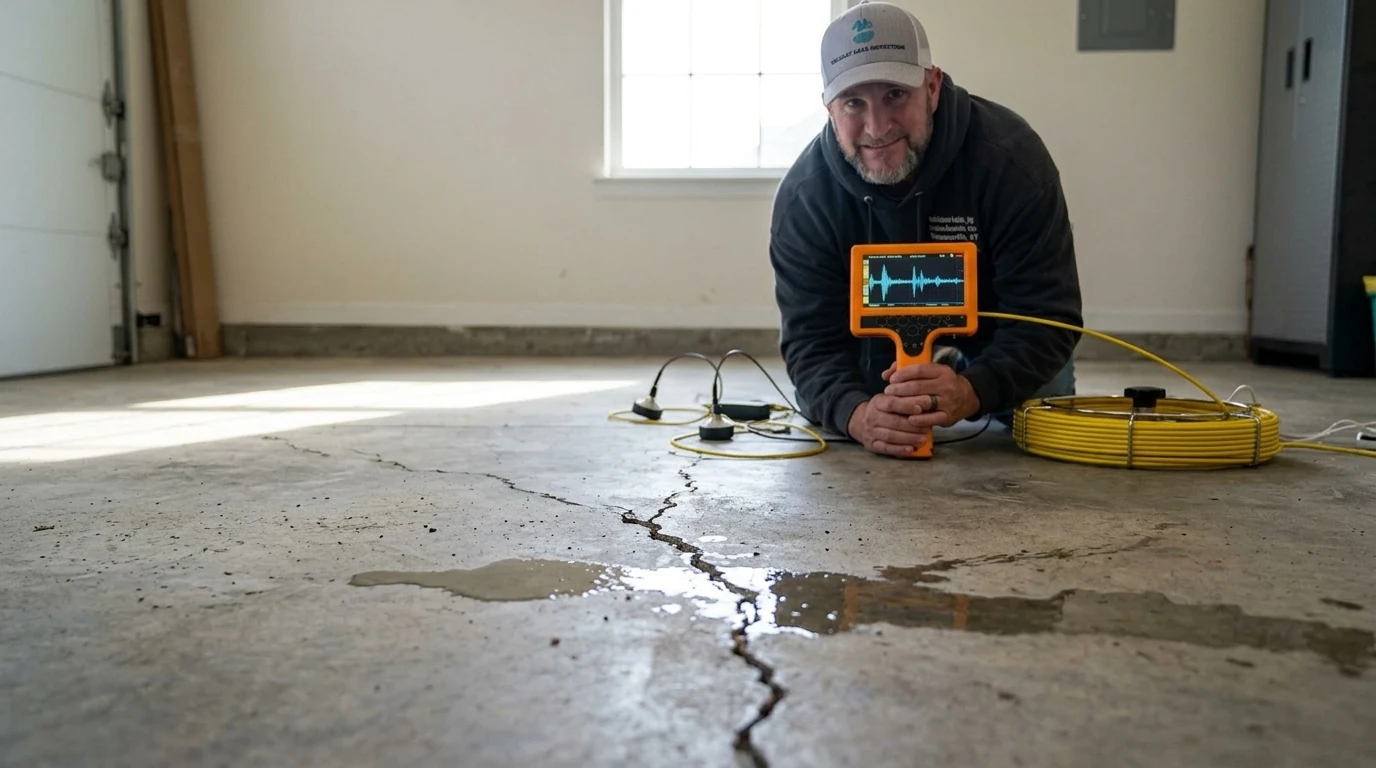
A slab leak is one of the most harmful hidden water leaks a homeowner can face. It happens beneath your concrete foundation, out of sight and out of mind. By the time you notice the damage, a small leak may have already caused big problems. A foundation leak like this is the kind of leak every homeowner should know about.
If you own a home in Nicholasville or the central Kentucky area, this guide is for you. We will walk you through the early warning signs of a slab leak, what causes slab leaks, and how to protect your home before the damage gets worse.
Wildcat Leak Detection has over 25 years of experience in slab leak detection and repair. We serve Nicholasville, Lexington, Frankfort, and all areas within 40 miles. If you suspect a slab leak, call us at (502) 300-5060 right away.
A slab leak occurs when a water line or drain pipe beneath a home's concrete foundation breaks, cracks, or wears through. The leak allows water to seep into the soil beneath the slab. Over time, this water from a slab leak can erode the ground under your home and cause serious damage. Finding a slab leak in your home early is the key to keeping repair costs low.
Most homes in Nicholasville sit on a concrete slab foundation. The water pipes that carry your water supply run through or beneath the slab. When one of those pipes fails, you get a slab leak. Slab leaks are hidden beneath your foundation, which makes them hard to spot. That is why knowing the warning signs matters so much.
"Slab leaks are a serious threat to your home. The sooner you catch one, the less it costs to fix."
How do you know if you might have a leak beneath your foundation? Here are the slab leak warning signs every homeowner should watch for:
One of the first leak signs many homeowners notice is an increase in your water bill. If your water usage hasn't changed but your bill keeps going up, a hidden water leak could be the cause. Even a small leak beneath the slab can waste hundreds of gallons a month.
What to do: Compare your bills over the past few months. If you see a steady rise and your water usage hasn't changed, call a plumber.
Do you hear the sound of running water when no faucets or fixtures are on? This is a classic sign of a slab leak. The sound of water running through pipes beneath your floor often means water is escaping from a crack or break.
What to do: Turn off all water in the house. If you still hear running water, you may have a hidden leak.
A drop in water pressure can mean many things. But if it happens all of a sudden, a slab leak could be to blame. Water escaping from a broken pipe means less water reaches your faucets. Low water pressure paired with other signs on this list is a strong hint.
What to do: Check all faucets. If the pressure is low everywhere, it may indicate a slab leak.
If you feel warm spots on your tile or hard floors, it could mean a hot water line beneath the slab is leaking. Moisture from a slab leak can also make your floors feel damp or soft. You may even see water pooling in spots with no clear source.
What to do: Walk your floors with bare feet. Warm patches or damp areas that were not there before are a red flag.
Cracks in the foundation or walls of your home are a major warning sign. A slab leak can erode the soil beneath your foundation. As the ground shifts, your home's foundation may crack or settle. You might also see cracks in the foundation around door frames or along baseboards.
What to do: Look for new cracks in your floors, walls, or exterior. If they seem to grow or spread, call for a slab leak detection check.
Water damage from a slab leak creates the perfect setting for mold growth. If you smell something musty or see mold near your baseboards, carpet, or flooring, a leak beneath your foundation could be the source.
What to do: Do not ignore musty odors. They often point to hidden water that has been there for a while.
Want a quick way to check for a hidden leak? Monitor your water meter. Turn off every faucet and fixture in your home. Wait 30 minutes. If the meter still moves, you likely have a leak somewhere. This simple test can help you spot a potential slab leak early.
Slab leaks do not happen for just one reason. Here are the most common causes:
Nicholasville homes, like many in central KY, often sit on clay-heavy soil. This type of soil expands and contracts with rain and drought. That movement puts extra stress on the pipes beneath your concrete foundation and is one of the top things that causes slab leaks in this area.
Ignoring a slab leak is a costly mistake. Here is what slab leaks can lead to when left alone:
Slab leaks can lead to problems that cost far more than the repair itself. The key is to catch the leak early and fix it fast.
If you suspect a leak in your Nicholasville home, our team is ready to help. Here is how our professional slab leak detection and repair process works:
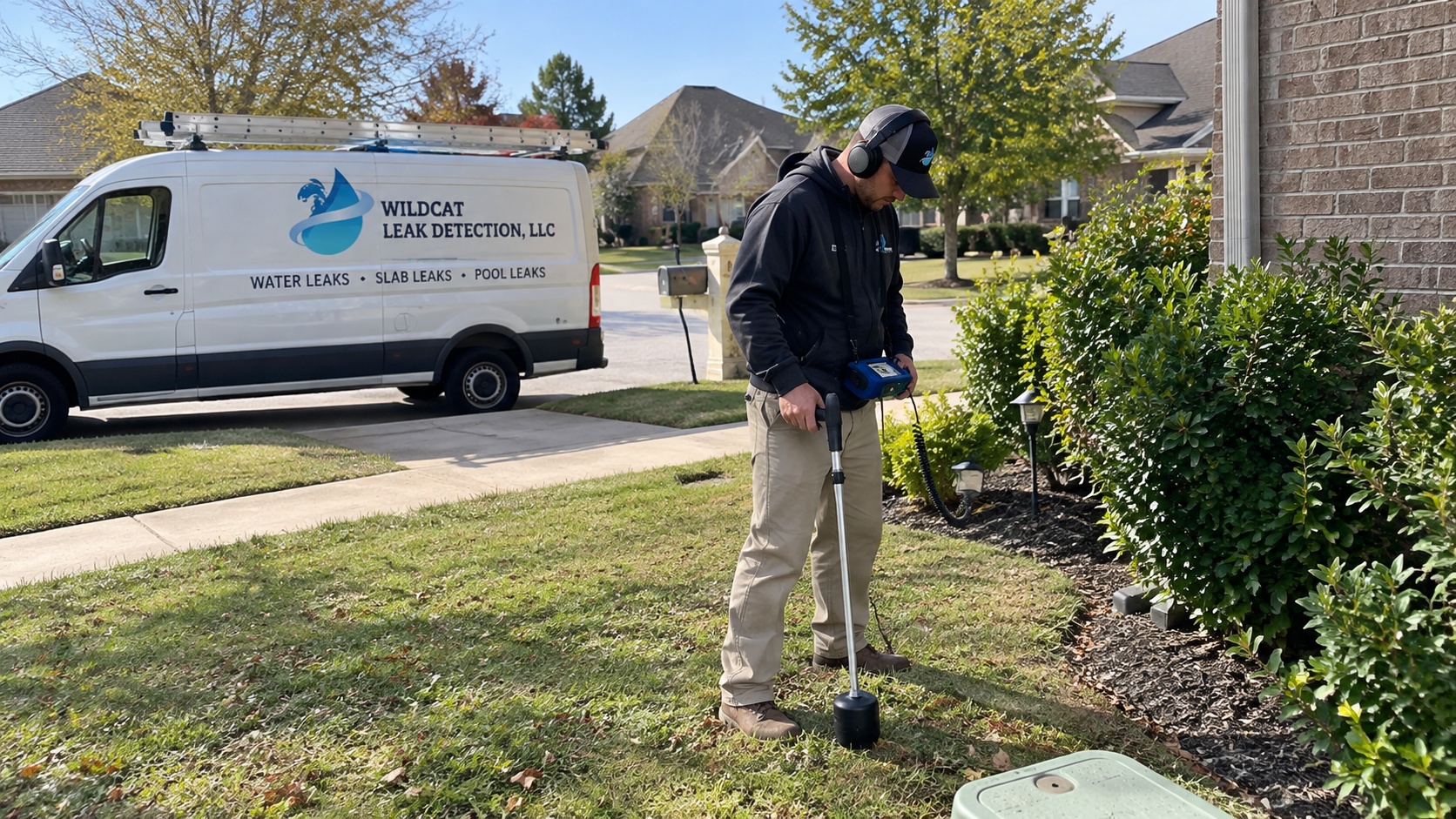
Our leak detection and repair services are built on 25 years of hands-on work. We use the latest tools to find even the most hidden leak beneath your home's concrete foundation.
Not every slab leak repair is the same. The method we use depends on the size and location of the leak. Here are common repair options:
The right fix for your slab leak depends on your home, your pipes, and the damage. We walk you through every option so you can make the best choice.
You cannot stop every slab leak. But you can take steps to lower the risk. Here is how to protect your home:
Preventing future slab leaks starts with staying aware.
If you see any of the warning signs listed above, do not wait. A slab leak that occurs beneath your home will only get worse with time. The sooner you call, the less damage it does.
Wildcat Leak Detection is the team Nicholasville homeowners trust for slab leak detection and repair. We serve Nicholasville, Lexington, Frankfort, Georgetown, and all areas within 40 miles. Our licensed team uses advanced tools to find and fix slab leaks with care.
Call Wildcat Leak Detection at (502) 300-5060 or email wildcatleakdetection@gmail.com for a free quote. Protect your home. Catch the leak early. Let us help.