How to Know If Your Lexington Home Needs Repiping (Not Just a Repair)
August 22, 2026
Read more
Hidden water leaks can cost thousands before you ever see a drop. Learn what to watch for and how Wildcat Leak Detection protects Georgetown homes.
A slow drip behind a wall or a soft spot in the floor can seem minor at first. But for Georgetown, KY homeowners, a hidden water leak left unchecked can mean thousands of dollars in structural damage, mold remediation, and wasted water bills before the problem is ever visible to the naked eye.
At Wildcat Leak Detection, we have spent over 25 years finding and fixing leaks that other companies miss. This guide covers what every Georgetown homeowner should know about water leak detection, from the early warning signs to what the process actually looks like when a certified specialist comes to your home.
Georgetown sits in Scott County, where older neighborhoods mix with newer subdivisions built over the last two decades. That variety in housing stock means the leak risks vary too.
Older homes often have galvanized or copper pipes that have been in the ground for 30 to 50 years. Newer builds sometimes have PEX or CPVC plumbing that, while more flexible, can still develop pinhole leaks at fittings and joints. Neither type is immune.
What makes water leaks expensive is not the leak itself. It is the delay. A pinhole leak behind drywall loses roughly 250 gallons of water per day. At that rate, a leak running for three months before discovery can cause significant subfloor damage, mold behind walls, and a water bill spike that shocks homeowners when it finally arrives.
The Kentucky climate does not help. Freeze and thaw cycles through Georgetown winters put repeated stress on supply lines, especially where pipes run through exterior walls or unheated crawl spaces.
Most homeowners do not find leaks by seeing water. They find them by noticing something off. Here are the signs worth taking seriously.
Unexplained increase in your water bill. If your usage habits have not changed but your bill has jumped $30, $50, or more, something is using water that you are not accounting for. This is one of the most reliable early indicators.
Low water pressure. A sudden drop in pressure at one or more fixtures can point to a break or leak somewhere in the supply line feeding those fixtures.
Warm or damp spots on floors. A hot water line leaking beneath a slab will transfer heat upward. If you notice a warm patch on tile or hardwood with no obvious explanation, that is worth investigating.
The sound of running water with everything off. If you hear water moving through your pipes when no fixtures are in use, a leak is actively running somewhere in the system.
Musty odors in rooms with no moisture source. Mold begins growing within 24 to 48 hours of water exposure. A musty smell in a bathroom, utility room, or along an exterior wall often means water has been sitting somewhere it should not be.
Bubbling or peeling paint and wallpaper. Moisture migrating through drywall will cause the surface finish to fail. This is often one of the last visible signs before more serious damage becomes apparent.
If you are seeing one of these signs, the worst move is to wait. The damage compounds quickly, and the longer a hidden leak runs, the more expensive the remediation becomes.
A lot of Georgetown homeowners assume leak detection means tearing up floors or cutting into walls. That is not how Wildcat Leak Detection works.
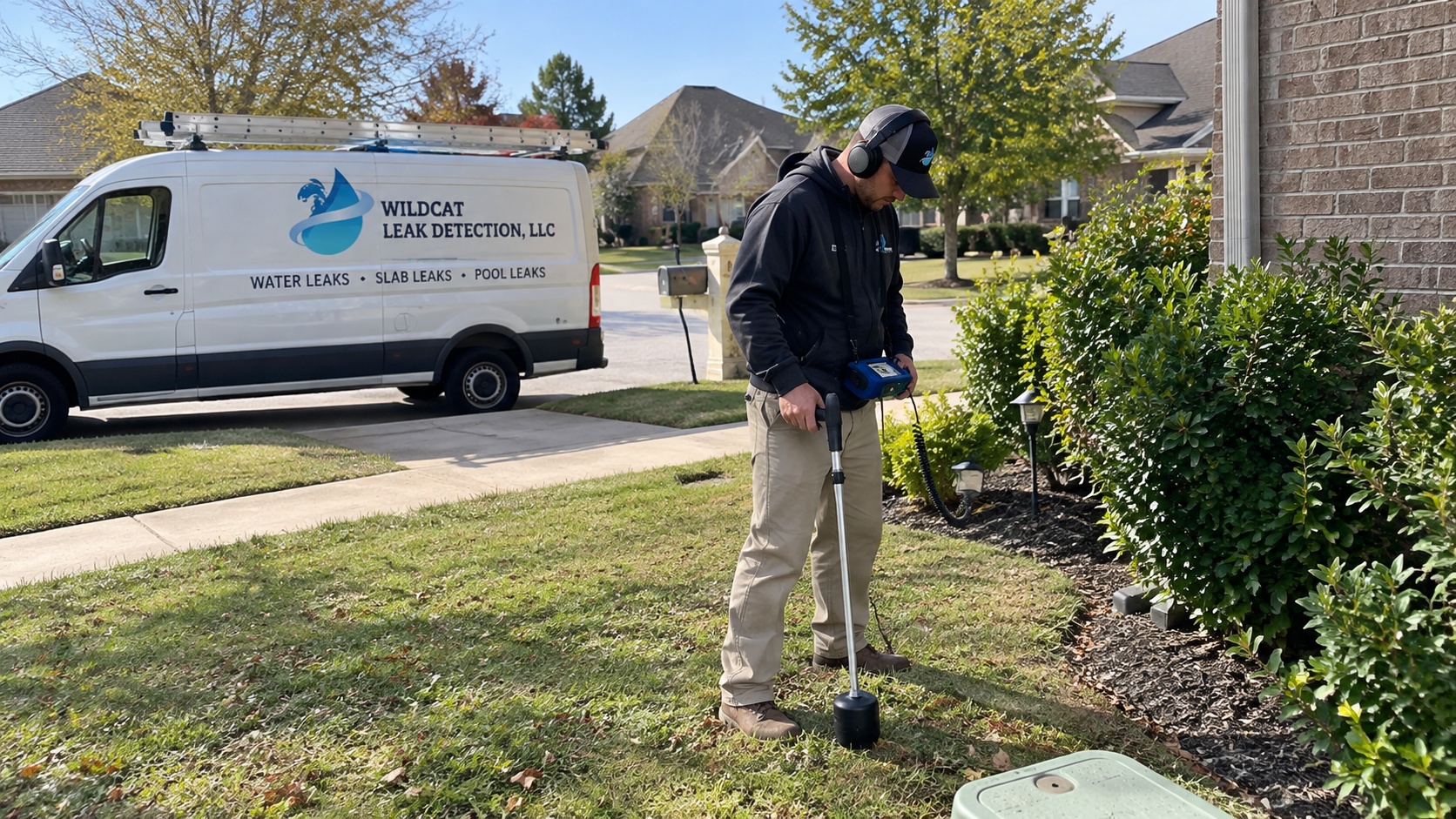
We use professional-grade acoustic listening equipment and electronic amplification tools to locate leaks without destructive investigation. The technology allows us to hear water movement through concrete, drywall, and soil with a level of precision that eliminates guesswork.
Here is what a typical service call looks like:
Initial assessment. We start by reviewing your water meter and shutoff valves to confirm a leak is present and get a sense of its size. A simple meter test can tell us within a few minutes whether water is escaping somewhere in the system.
Pressure testing. We isolate sections of your plumbing and test pressure to narrow down which zone the leak is in. This step eliminates large portions of the system quickly and focuses the search area.
Acoustic detection. Using Leaktronics equipment, we listen along pipe routes for the distinct sound signature of a pressurized leak. Trained ears can distinguish a leak from normal pipe sounds even through several inches of concrete or packed soil.
Pinpoint location. Once the general area is confirmed, we narrow the location to within a few inches so any repair work is targeted and minimal. No exploratory trenching, no unnecessary demolition.
Report and recommendation. We walk you through exactly what we found, where it is, and what your repair options look like. You leave the conversation with a clear picture of the problem and what it will take to fix it.
The whole process for a standard residential service call typically runs two to four hours, depending on property size and how deep in the system the leak is located.
Georgetown homeowners call us most often for a few specific leak types. Knowing what they are can help you recognize the early signs faster.
Slab leaks. Georgetown has a mix of slab-on-grade and crawl space construction. Slab leaks occur when supply or drain lines running beneath a concrete foundation develop a break. They are especially common in homes built in the 1970s through 1990s when copper piping was standard. Corrosion and soil movement are the primary causes.
Supply line leaks. These can occur anywhere along the lines feeding your fixtures, including under sinks, inside walls, and in the ceiling between floors. Small pinholes in copper can run for months before causing visible damage.
Pool and irrigation leaks. Georgetown homeowners with backyard pools or irrigation systems often do not realize how much water these systems can lose through a small crack or failed fitting. An irrigation leak can run undetected for an entire season if it is underground.
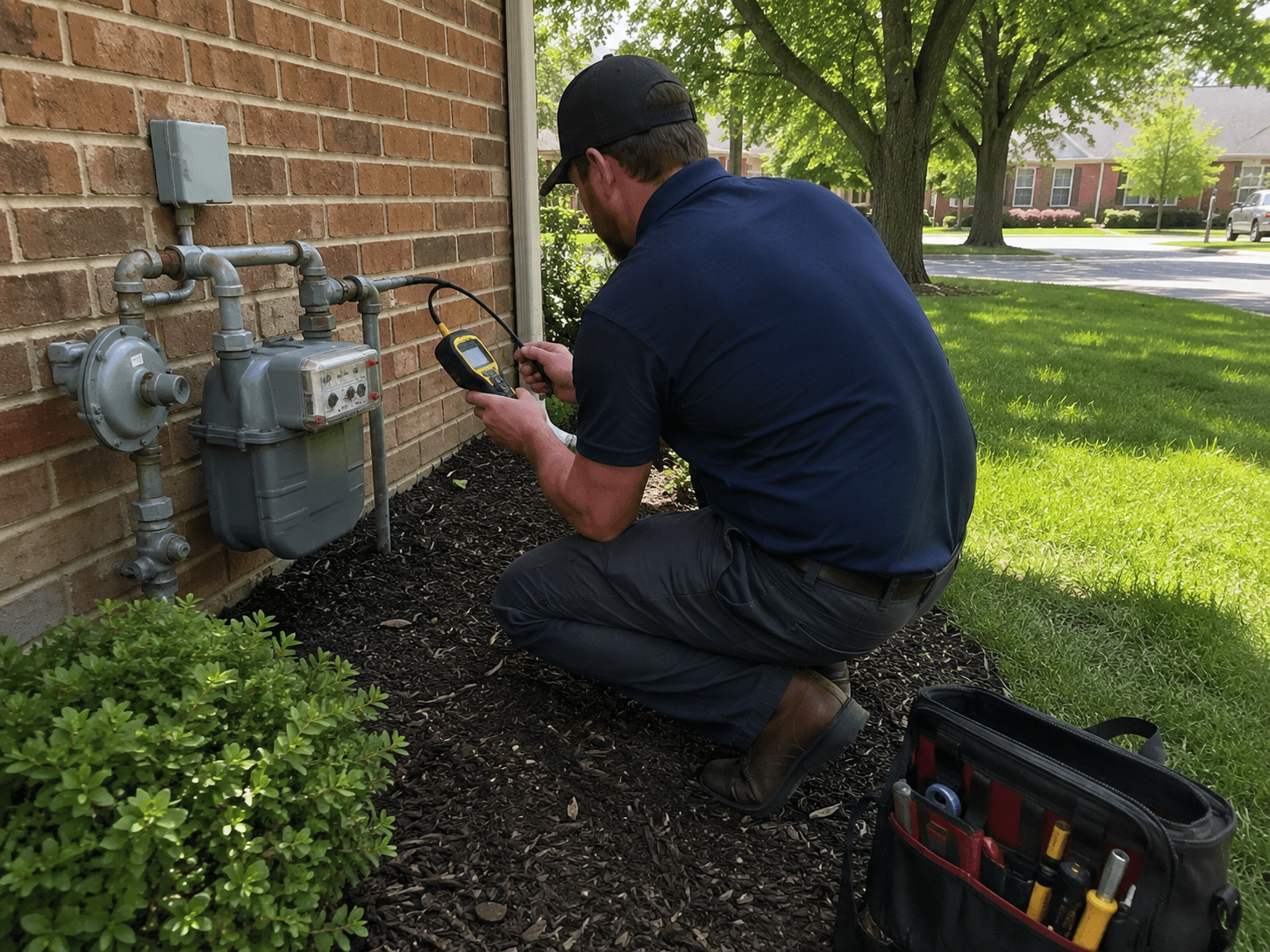
Gas leaks. While not a water leak, homeowners in Georgetown should know that Wildcat Leak Detection also handles gas leak detection and repair. Gas leaks require immediate response, and we have the equipment to locate them accurately.
If you are in a slab-on-grade home in Georgetown, slab leaks are worth understanding in more detail because the repair decisions are more involved.
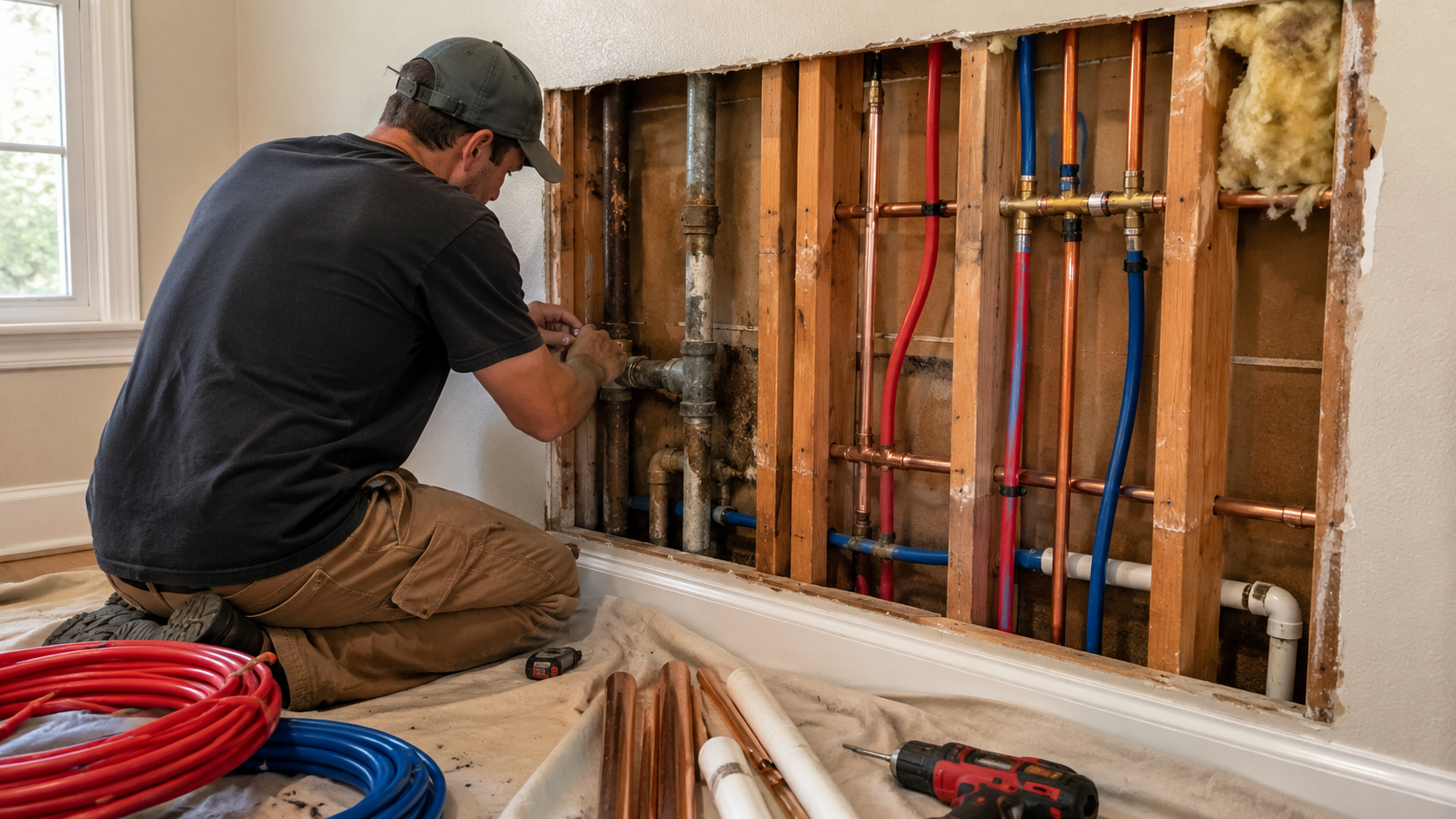
When a supply line beneath your slab develops a break, your options typically include spot repair, pipe rerouting, or full repiping. The right choice depends on the age of your plumbing, the accessibility of the leak location, and whether the affected pipe material is likely to fail again in the near future.
A lot of homeowners in Scott County have reached out to us after another company told them the only option was to jackhammer the floor. That is sometimes true. But in many cases, rerouting the affected line through the walls or attic is a cleaner, less disruptive solution that gives you a fresh pipe run rather than a patched one.
We give Georgetown homeowners an honest assessment of all available options before any work begins.
Prevention is not always possible, but a few habits can catch problems earlier and reduce the damage when a leak does develop.
Monitor your water meter monthly. Shut off everything in the house and note the meter reading. Wait 30 minutes without using any water. If the meter moved, you have a leak somewhere in the system.
Know where your main shutoff is. In an emergency, being able to cut water to the house immediately limits damage significantly. Most Georgetown homes have the shutoff near the foundation where the supply line enters the building.
Schedule regular plumbing inspections if your home is over 20 years old. Older pipe materials in Scott County homes have a predictable service life. A proactive inspection catches deterioration before it becomes a failure.
Watch your water bills consistently. A single high bill is easy to explain away. Two or three in a row means something is worth looking into.
Do not ignore small signs. A water stain on a ceiling, a soft spot in flooring, or a musty smell in a closet rarely resolves on its own. These are signals worth acting on.
The most common indicators are warm spots on the floor, low water pressure throughout the house, and a water bill that has increased without explanation. You may also hear water running when all fixtures are off. Slab leaks in Georgetown homes are most common in properties built before 2000 with copper supply lines running beneath the foundation.
Coverage varies by policy. Many Kentucky homeowners insurance policies will cover the cost of locating a leak and repairing the resulting damage if the cause is sudden and accidental, but not gradual deterioration. We recommend calling your insurer before scheduling service so you understand what documentation they need. Wildcat Leak Detection can provide a written report of findings to support your claim.
Most residential leak detection calls in Georgetown run two to four hours from arrival to written report. Larger properties or situations with multiple potential leak sources may take longer. We give you a time estimate before we start so you can plan your day accordingly.
In the majority of cases, yes. Wildcat Leak Detection uses acoustic equipment and pressure testing to locate leaks without destructive investigation. When a repair does require access to the pipe, we pinpoint the exact location first so the opening is as small and targeted as possible.
If you suspect an active leak, shut off the water to the affected area or to the whole house if you are unsure of the source. Avoid using plumbing in the suspected area. Place towels or containers under visible drips if water is reaching finished surfaces. Do not use electrical outlets or switches near areas where water is present.
Wildcat Leak Detection serves Georgetown as part of our standard service area. Georgetown is within our 40-mile service radius of Lexington, and we have completed many residential and commercial leak detection projects in Scott County. Call (502) 300-5060 to schedule a free estimate.
Water damage compounds faster than most people expect. A leak that seems manageable today can mean mold, structural damage, and a far more expensive repair in just a few weeks.
Wildcat Leak Detection serves Georgetown and all of Scott County with the same certified, non-invasive approach we have built our reputation on across central Kentucky. Call us at (502) 300-5060 or request a free estimate.