
Frozen and Burst Pipes in Lexington: Prevention, Warning Signs, and What to Do First
October 13, 2026
Read more
Recurring leaks in different spots? Learn when it's time for repiping instead of another repair.
Calling a plumber for the third leak in six months feels different than the first one. The first leak is bad luck. The third one is a pattern, and it usually means the problem isn't the pipe you just fixed. It's every pipe like it.
Wildcat Leak Detection gets this call often in Lexington, especially from owners of homes built before 1980. A single leak gets patched, then another shows up a few months later in a different spot. At some point, repairing pipe after pipe costs more than replacing the whole system, and that's the exact moment repiping becomes the smarter call instead of the expensive one.
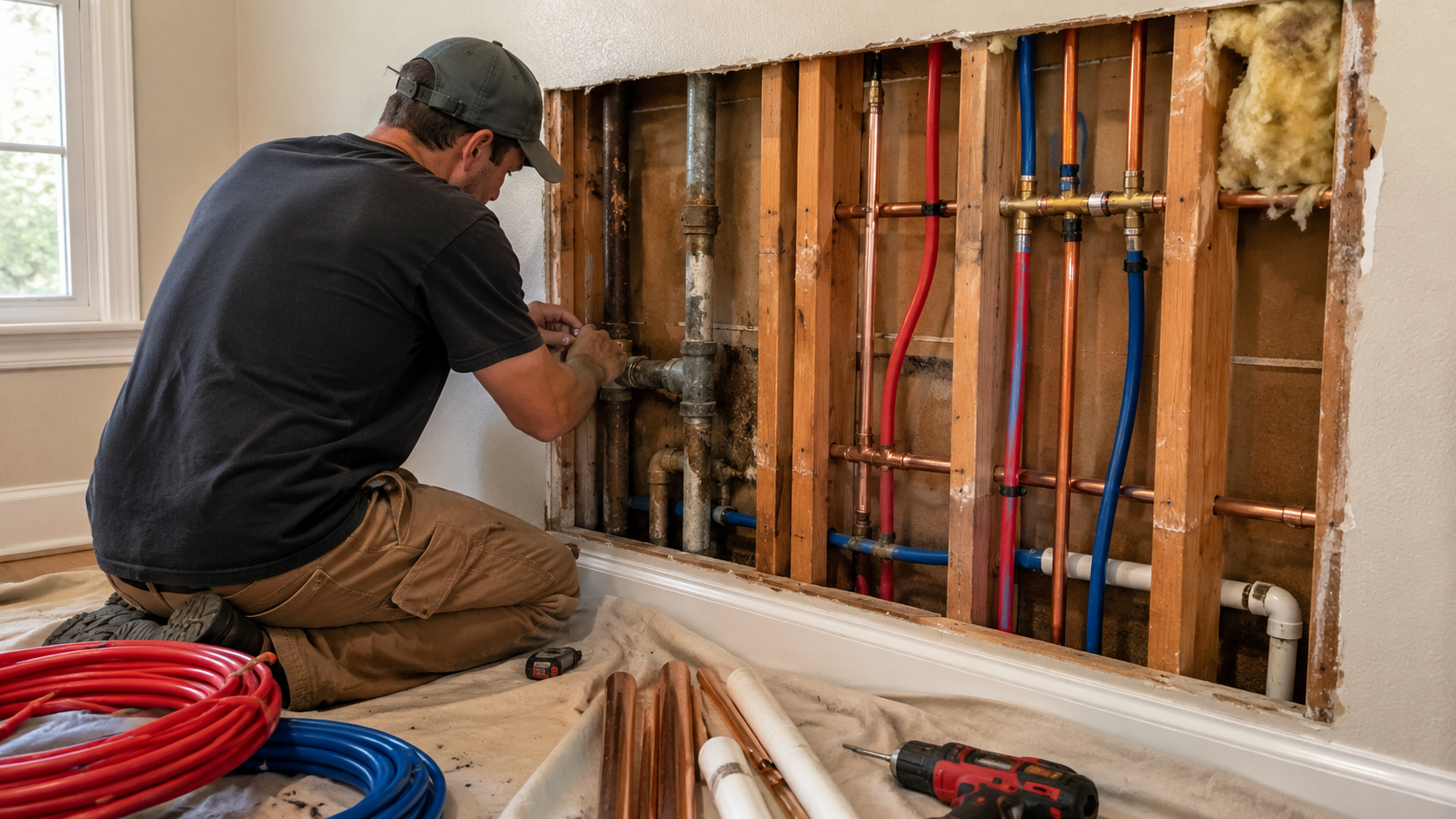
Repiping is the process of removing your home's old water supply lines and replacing them with new pipe, usually copper or PEX. This is different from a repair, which fixes one section or one leak. Repiping addresses the whole system at once, room by room, before the next failure happens instead of after.
Most homeowners don't repipe on a whim. It's a bigger job with a bigger price tag, so it only makes sense once the signs point toward system-wide failure rather than a single bad joint.
A few patterns tend to show up together in homes that need full repiping rather than another spot repair.
If your home checks two or more of these boxes, it's worth having a technician take a closer look before the next leak forces the decision for you.
Lexington has a lot of housing stock from the mid-1900s through the 1970s, back when galvanized steel pipe was standard. Steel pipe corrodes from the inside, and that corrosion narrows the pipe and eventually creates pinhole leaks that show up in unpredictable places.
Galvanized pipe typically lasts 40 to 50 years before failure becomes common, and a lot of homes in Lexington's older neighborhoods are right in that window now. Homes built in the 1980s with polybutylene pipe carry a different risk. That material is prone to sudden failure, and many insurance companies flag it during inspections.
This is the question we get asked the most, and the honest answer depends on how widespread the problem actually is.
A repair makes sense when the issue is isolated. One section of pipe failed, the rest of the system is sound, and there's no pattern of repeat leaks. Repiping makes sense when the failures keep happening in different spots, because that pattern means the pipe material itself is breaking down, not just one weak joint.
Homeowners sometimes choose to keep repairing because it feels cheaper in the moment. However, three or four repair calls in a year often add up to more than the cost of repiping once, and that math only gets worse the longer it's put off.
Here's how the process generally works when our team handles a full repipe.
Most residential repipes take a few days, depending on the size of the home and how many fixtures need new connections.
Putting off repiping doesn't just risk another leak. It risks the kind of leak that happens inside a wall or under a slab, which can cause water damage long before anyone notices a drop in pressure.
We've seen Lexington homeowners deal with hidden pinhole leaks that ran for weeks before showing any visible sign. By the time drywall or flooring needs to be replaced, the total cost is often higher than the repiping job would have been on its own.
Most residential repipes take two to four days, depending on the home's size and how many fixtures are involved. Larger homes or ones with limited access points can take a bit longer.
Both work well, and the right choice depends on your home's layout, budget, and long term plans. Copper has a longer track record and higher durability, while PEX is more flexible and often faster to install. We'll walk through the tradeoffs for your specific home during the assessment.
Some access points are necessary, but our team plans the path to minimize cutting and disruption wherever possible. Any access points we do need to open are patched before we finish the job.
A technician can usually identify pipe material during an inspection, often just by checking exposed sections in a basement or crawlspace. Galvanized pipe has a dull gray color and often shows visible corrosion, while polybutylene is typically gray or blue plastic tubing.
In some cases, yes, especially if only one section of the home has failing pipe while the rest is in good condition. A full assessment will tell us whether a partial repipe makes sense or whether the whole system is due for replacement.
Coverage varies by policy and by the reason for the repipe. Insurance is more likely to cover repiping tied to sudden pipe failure or water damage than repiping done purely as preventative maintenance. Checking with your provider before starting the project is a good first step.
If your home has had more than one pipe leak in the past year, it's worth finding out whether you're looking at another repair or the start of a bigger pattern. Call Wildcat Leak Detection to book a plumbing assessment and get a clear answer on what your pipes actually need.